
New Hope asks more of an HVAC system than almost any other town we serve. The Delaware River keeps summer air heavy with moisture, the floodplain puts basements at risk, and many of the buildings along Main, Ferry and Mechanic Streets were standing long before anyone imagined air conditioning. We handle AC repair, air conditioning installation and heating repair across the borough and the 18938 area from our Plumsteadville shop — about 13 miles and 25–30 minutes via Route 413 and Route 202.
Living by the Delaware: humidity comes first
In most of Bucks County, an air conditioner's main job is lowering temperature. In New Hope, removing moisture matters just as much. An oversized system chills the air in a few minutes, shuts off, and leaves the house at 72°F and 65% humidity — cool but sticky. The fixes, in the order we usually try them:
- Confirm the refrigerant charge and clean the indoor coil — a dirty or undercharged coil removes far less water.
- Slow the blower down so air spends longer crossing the cold coil.
- Set the thermostat fan to "Auto," not "On," so water on the coil drains instead of re-evaporating.
- Add a whole-home dehumidifier if the house still sits above about 55%.
- At replacement time, choose a correctly sized or variable-speed system.
Flood-smart equipment placement
The Delaware floods of 2004, 2005 and 2006 are still a reference point for many New Hope homeowners. Furnaces, boilers, water heaters and air handlers on a basement floor are the first things to go. When we replace equipment in flood-prone parts of the borough, we look at moving the air handler to an attic or upper floor, raising boilers on platforms, wall-mounting or stand-mounting outdoor units, and choosing ductless systems that keep most components above the waterline.
If your equipment has already been underwater, don't restart it. Gas valves, control boards and motors that were submerged need inspection — and often replacement — before they're safe to run.
Adding cooling to historic New Hope buildings
Stone and frame homes from the 1700s and 1800s rarely have space for ducts. Ductless mini-splits are our usual recommendation: each indoor head needs only a small line-set penetration, and the outdoor unit can often sit on a rear wall bracket out of sight. A single-zone system typically costs $3,000–$5,500 installed; a multi-zone system for a whole house runs higher depending on the number of rooms.
New Hope has a historic district, and exterior equipment visible from the street may need borough review. We'll help you plan a location that keeps condensers and line-set covers discreet.
Steam and hot-water heat in the borough
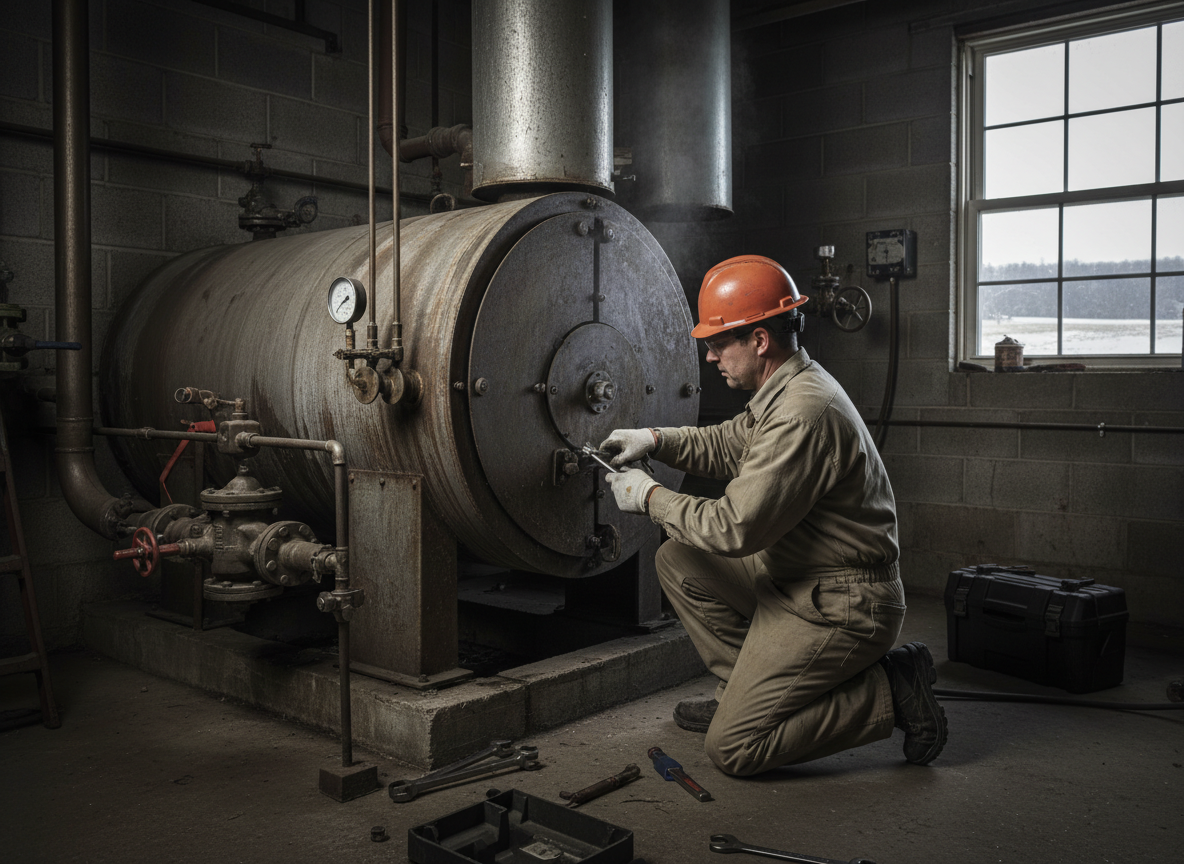
Plenty of older New Hope buildings still heat with steam. Banging pipes, radiators that never get hot and a boiler that cycles on its low-water cutoff are all problems we fix. See boiler repair and furnace & heating repair.
Timing a visit around New Hope's crowds
Summer and fall weekends bring heavy traffic to Bridge Street and Main Street, and parking can be tight. For non-emergency AC repair or estimates we'll suggest weekday times; for emergencies, our 24/7 service comes whenever you need it. We also cover neighboring Solebury and Lahaska.
Around New Hope
We regularly work near:
- 📍Delaware River & New Hope–Lambertville Bridge
- 📍Delaware Canal State Park towpath
- 📍Bucks County Playhouse
- 📍New Hope & Ivyland Railroad
- 📍Parry Mansion
- 📍Main Street & Bridge Street
- 📍Ferry Street
AC Repair in New Hope — Local Notes
- •River humidity makes dehumidification as important as cooling.
- •Basements in the floodplain put furnaces, boilers and air handlers at risk — relocate or raise when replacing.
- •Historic buildings on Main, Ferry and Mechanic Streets usually need ductless or small-duct cooling.
- •Exterior equipment in the historic district may require borough review.
- •About 25–30 minutes from our shop via Route 413 and Route 202.