
2026-08-28 · Frank Reilly
Why Your AC Isn't Removing Humidity (and How to Fix It)
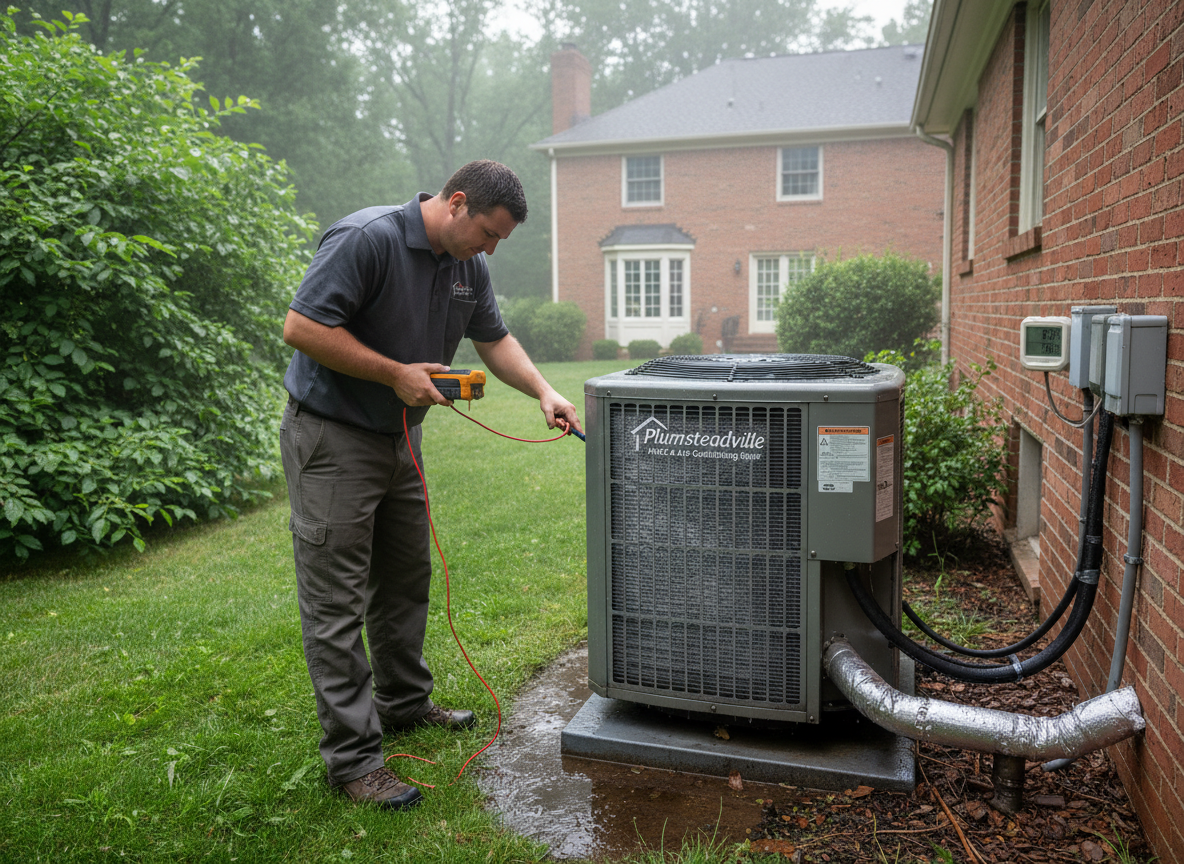
An air conditioner does two jobs: it lowers the temperature and it removes moisture. Water in the air condenses on the cold indoor coil, drips into the drain pan and runs out the condensate line. When that second job falls short, the house can read 72°F on the thermostat and still feel damp and sticky. In central Bucks County, where summer dew points regularly climb into the upper 60s and low 70s, it's one of the most common comfort complaints we hear.
Target humidity
Indoors, aim for roughly 40–50% relative humidity in summer. Above about 55–60%, the house feels clammy, dust mites and mold thrive, and musty smells appear. A $15 digital hygrometer will tell you where you stand.
The most common causes
1. The system is oversized. This is the number-one cause. An air conditioner that's too big cools the house in a few minutes and shuts off before the coil gets cold enough, long enough, to pull much water out. Many Bucks County homes were fitted with a half-ton to a full ton more capacity than they need.
2. The fan is set to "On." With the fan running continuously, water sitting on the coil after the compressor stops is blown back into the house. Set the fan to "Auto."
3. The blower runs too fast. High airflow across the coil cools air but removes less moisture. Many systems have a blower speed or dehumidification setting that a technician can adjust.
4. Low refrigerant or a dirty coil. Both keep the coil from getting cold enough to condense much water. A leak also means the system will keep losing performance.
5. Moisture coming in. Damp basements and crawl spaces, especially in homes near Tohickon Creek, Neshaminy Creek or the Delaware River, add moisture faster than the AC can remove it. Leaky return ducts in a basement or crawl space can pull that damp air straight into the system.
What you can do yourself
- Set the thermostat fan to Auto.
- Replace a dirty filter.
- Run bathroom fans during showers and the range hood while cooking.
- Keep gutters and downspouts directing water away from the foundation.
- Use a basement dehumidifier if the basement stays above 55%.
Don't lower the thermostat several degrees to fight the humidity. It makes the house colder without fixing the moisture, and raises the PECO bill.
What a technician can do
- Check and correct the refrigerant charge, and clean the indoor coil.
- Lower the blower speed or enable a dehumidify mode.
- Seal leaky return ducts in basements and crawl spaces.
- Install a ducted whole-home dehumidifier that controls moisture independently of cooling.
- At replacement time, size the new system with a Manual J load calculation, or choose a variable-speed system that runs longer, slower cycles. See AC installation.
A spring AC tune-up covers the coil, charge and drain, which handles many humidity complaints before summer starts.
Signs it's more than humidity
Ice on the copper lines or the indoor coil points to low airflow or low refrigerant, not humidity. Turn the system off and call. Water around the indoor unit or through a ceiling usually means a clogged drain. See AC repair.
Homes near the river in New Hope, along the creek corridor in Neshaminy and in Solebury see this problem most often in our service area.