
2026-08-28 · Frank Reilly
AC Troubleshooting: What You Can Fix Yourself and When to Call a Pro
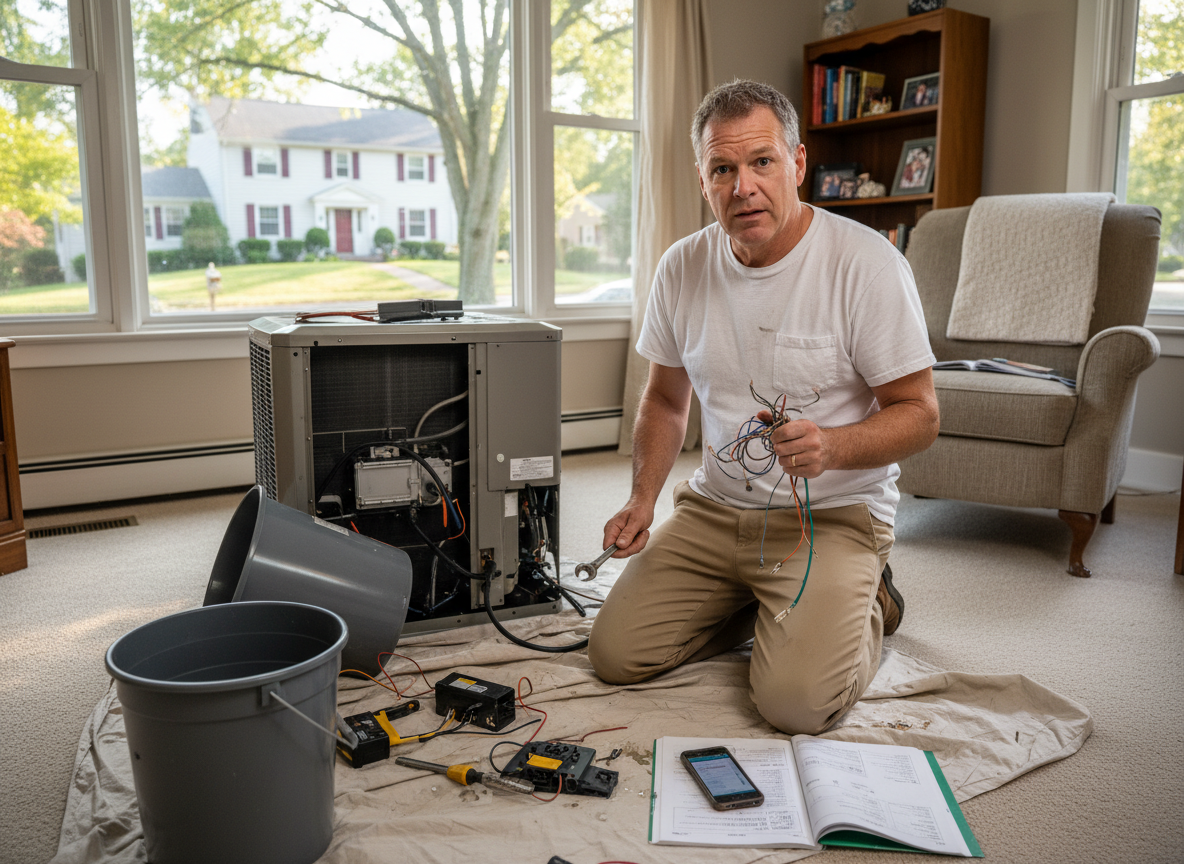
When the air conditioner stops cooling, a few quick checks can solve the problem or at least tell you what's wrong before you call. Other problems involve high voltage or refrigerant and are unsafe, or illegal, to tackle yourself. Here's where the line is.
Safe checks any homeowner can do
- Thermostat. Set to Cool, setpoint a few degrees below room temperature, fan on Auto. If the screen is blank, replace the batteries.
- Breakers. Look for a tripped breaker for the air handler or furnace and one for the outdoor unit. Reset once. If it trips again, stop and call.
- Outdoor disconnect. The gray box near the outdoor unit must be switched on.
- Furnace or air handler switch. Usually a light-style switch near the unit.
- Filter. Replace it if it's dirty. See How to Check and Change Your AC Filter.
- Outdoor coil. With power off at the disconnect, gently rinse leaves, cottonwood and grass clippings from the outside with a garden hose. No pressure washers, and don't bend the fins.
- Condensate drain. If there's water in the pan or the float switch has tripped, you may be able to clear the drain line opening with a wet-dry vacuum.
- Ice. If you see ice on the copper lines or indoor coil, set the thermostat to Off and the fan to On until it thaws. Then call, because something caused it.
Call a technician when you see any of these
- The outdoor unit hums but the fan doesn't spin, or it clicks and won't start. Usually a capacitor or contactor. Capacitors can hold a dangerous charge even with the power off.
- A breaker trips again after one reset. That's an electrical fault or a struggling compressor.
- Ice keeps coming back after a clean filter. Low refrigerant or an airflow problem.
- Hissing or bubbling at the refrigerant lines. A likely leak.
- Burning smells, smoke or scorched wiring. Turn the system off at the breaker.
- Water through a ceiling from an attic air handler.
- The system runs constantly and the house still won't cool.
DIY fixes that usually make things worse
- Adding refrigerant from a can. Handling refrigerant legally requires EPA Section 608 certification. Topping up without finding the leak doesn't fix it, and overcharging can damage the compressor.
- Swapping a capacitor by guesswork. The replacement has to match the rated microfarads and voltage, and the old one must be safely discharged.
- Pressure-washing the coil. It flattens the fins and cuts airflow.
- Resetting a breaker again and again. Repeated resets can damage the compressor and are a fire risk.
- Chemical coil cleaners indoors. The wrong cleaner can corrode the indoor coil and cause leaks.
What a professional diagnosis looks like
A proper visit measures instead of guessing: capacitor readings, amp draw on the compressor and fans, refrigerant pressures with superheat and subcooling, temperature drop across the coil, and static pressure in the ducts. That's how the real cause is found, whether it's a failed part, a dirty coil, a leak or ductwork that's too small. You should get a written price before any work starts.
For typical costs, see AC Repair Cost in Plumsteadville, PA. If the problem is humidity rather than temperature, read Why Your AC Isn't Removing Humidity. When you're ready for help, see our AC and HVAC repair service, or call our 24/7 emergency line if the house is dangerously hot. We serve Plumsteadville, Fountainville, Pipersville, Doylestown and the rest of central Bucks County.